
To answer the most frequently asked question right away:
I cannot provide a binding quotation until I have inspected the vehicle in stripped condition.
Every week, I receive messages asking: "How much will it cost to repaint my vehicle?"
Without seeing the vehicle in person, and ideally without the paint being stripped off the surface, it is impossible for me to give a reliable answer to this question.
This blog has two purposes:
Creating transparency for prospective clients
A clear, comprehensible basis that interested parties can use for guidance in advance to avoid misunderstandings and endless queries.
Unclear communication is often interpreted in the industry as a "tactic" used by tradespeople to ultimately be able to charge a higher price.
That's why my approach is the exact opposite:
It is important to me to create a clear starting point for my clients, where both sides begin a project with the same level of knowledge. This is the only way to ensure cooperation on equal terms that is transparent, respectful, and free of uncertainty.
A vehicle with its paint stripped off allows me to make an honest and informed assessment of the substrate and thus provide clear information about the work involved, the procedure, and the goal. This means that both the customer and I know from the outset what we are getting into with this project.
This creates trust, avoids misunderstandings, and forms the basis for a professional job in which both sides feel seen and valued.
1. Inquiry & initial contact
Initial contact is usually made via:
email
Telephone
social media
What information do I need for the initial inquiry?
The more information I have at the outset, the more efficiently the entire process runs.
The most important things are:
Is it a full restoration, partial restoration (usually exterior), or a repair?
Is it possible for the customer to bring the vehicle to my workshop so that it can be inspected on site?
Which vehicles do I work on—and which do I not?
Much more important than brand or model are:
The technical and structural condition of the vehicle
Communication and collaboration
A key point that is extremely important to me:
My relationship with the customer and my gut feeling often matter more to me than the vehicle itself.
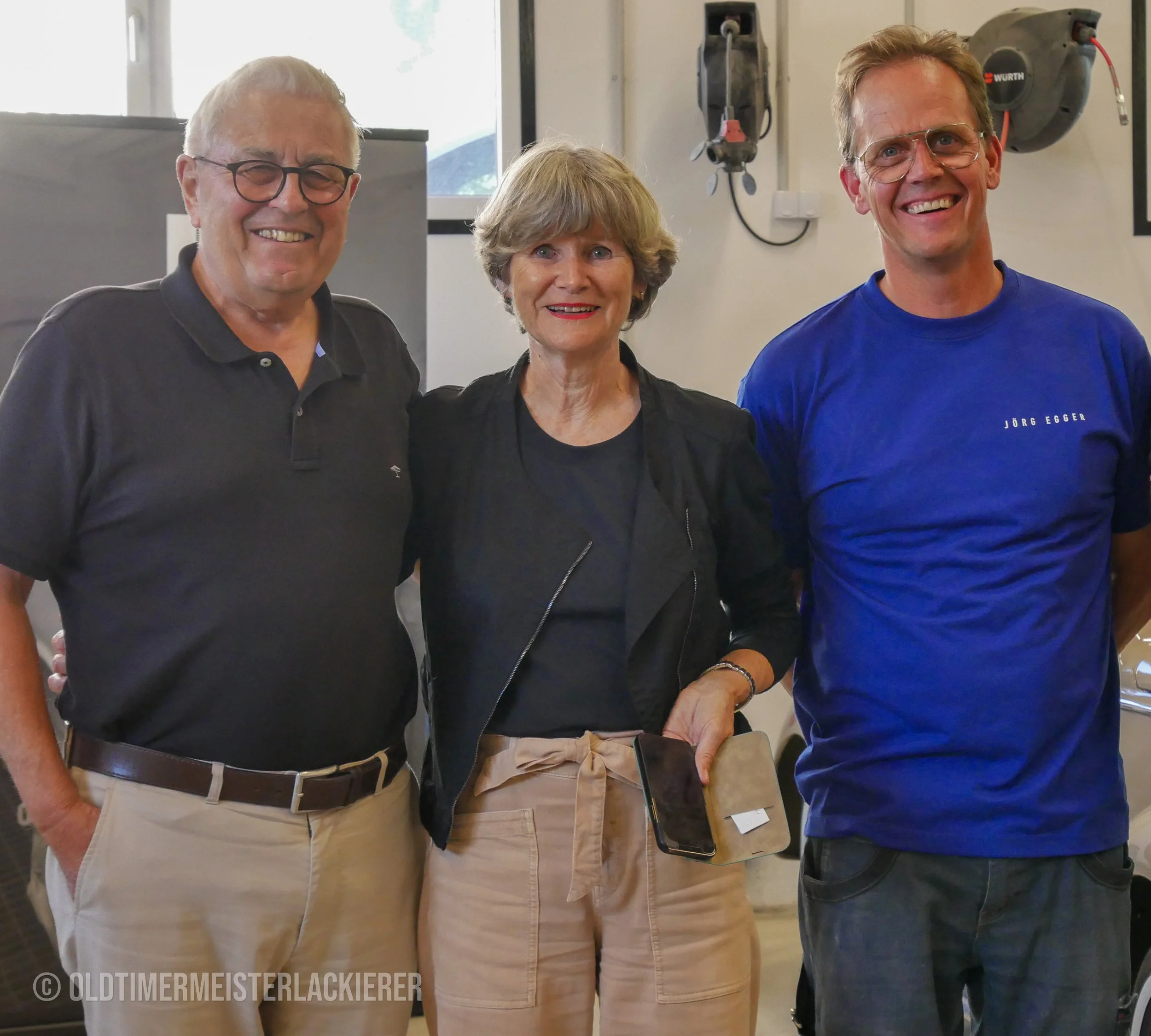
Good cooperation starts with a good feeling
If I have a bad feeling about a project or collaboration, I don't accept the job, regardless of which vehicle is involved.
No price or timeline without an inspection
It is generally not possible to provide information on price or time without inspecting the stripped vehicle.
Why?
I can only assess the actual scope of work on the actual substrate.
Paint can conceal problems that only become visible after the paint has been removed.
If the vehicle has not yet been stripped, I analyze:
The existing paintwork
Damage patterns such as: blisters, cracks, indentations, unusual layer thicknesses
These indications often allow conclusions to be drawn about possible problems in the substrate.
Why is it only possible to give a fixed price after the paint has been removed?
Only after removing the paint can I assess whether the bodywork has one or more of the following characteristics:
rust
panel distortion
body-filler repairs
Structural damage
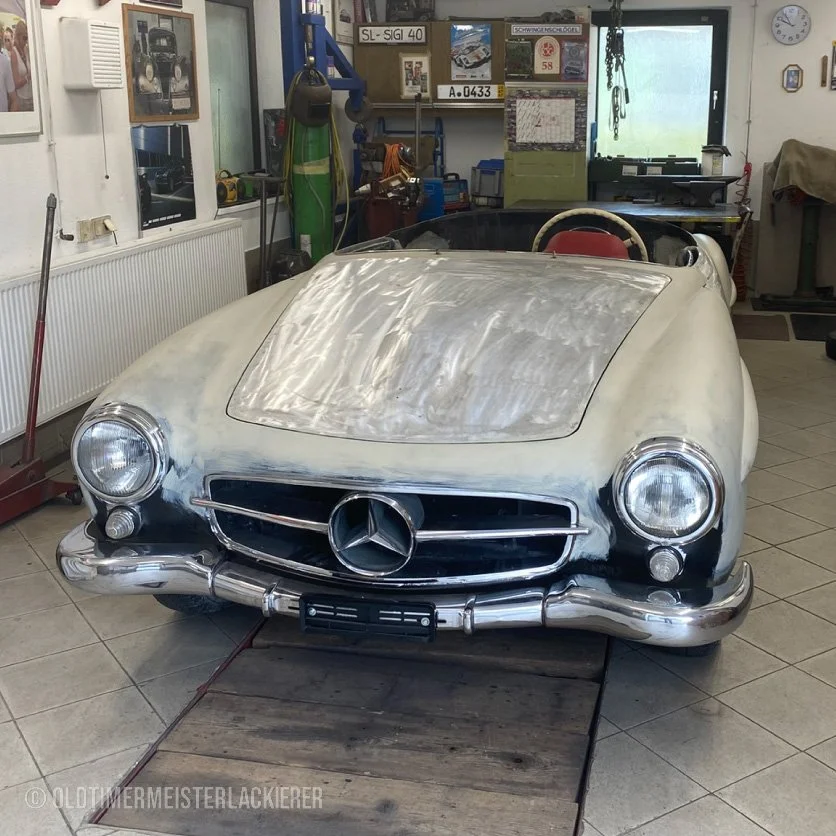
Practical example: Mercedes SL190
Problematic areas were already visible when the paint was applied.
After removing the paint, extensive damage to the underlying surface became apparent. Before the car came to my workshop, intensive bodywork repairs were necessary.
Without this preparatory work, a high-quality paint finish would not have been possible.
2.1 Restoration on existing paintwork
Some customers want to retain the existing paint and apply a new paint system over it.
In most cases, I am clearly opposed to this, except:
The existing paintwork is demonstrably in technically sound condition.
The customer consciously waives his/her warranty claim.
The reason is quite simple:
I cannot guarantee the durability of my paintwork if it depends on the condition of the underlying metal and any existing paintwork.
On-site inspection
I prefer it when the customer brings the stripped vehicle to my workshop.
Alternatively, an on-site assessment can be arranged by prior agreement.
This appointment will be invoiced in advance based on the time required and the distance traveled. If an order is placed, this amount will be credited toward the total price.
3. Project scope & goal definition
The scope of the project is defined together with the customer.
In most cases, there is already a clear idea.
Originality vs. Perfection
Here, the industry is clearly divided into two groups:
1. Originality, soul, and patina
Preservation or exact restoration of the original condition
Spot repairs often instead of full restoration
Historically accurate paint structures exactly according to factory specifications
2. Perfection & maximum durability
The most technically stable structure possible
No distortion and no visible defects
Original color tone, but easier to maintain and decades of durability and stability
In the end, it always comes down to a conscious decision:
Originality & soul vs. perfection, long-term durability
4. What is included in the price?
Communication takes place first verbally and then in writing in a quote.
The offer contains a detailed breakdown of all services with prices.
Any additional work will be treated as an additional service and communicated in advance with clearly defined additional costs.
As an additional service
Reported with clearly defined additional costs
In case of uncertainty or discrepancies, I will consult immediately. As a rule, I do not make any important decisions without approval.
5. Finish category
You can choose between a professional, high-quality finish and the Egger Surface System (piano lacquer finish).
With sufficient experience, both types of finish can be calculated precisely in advance.
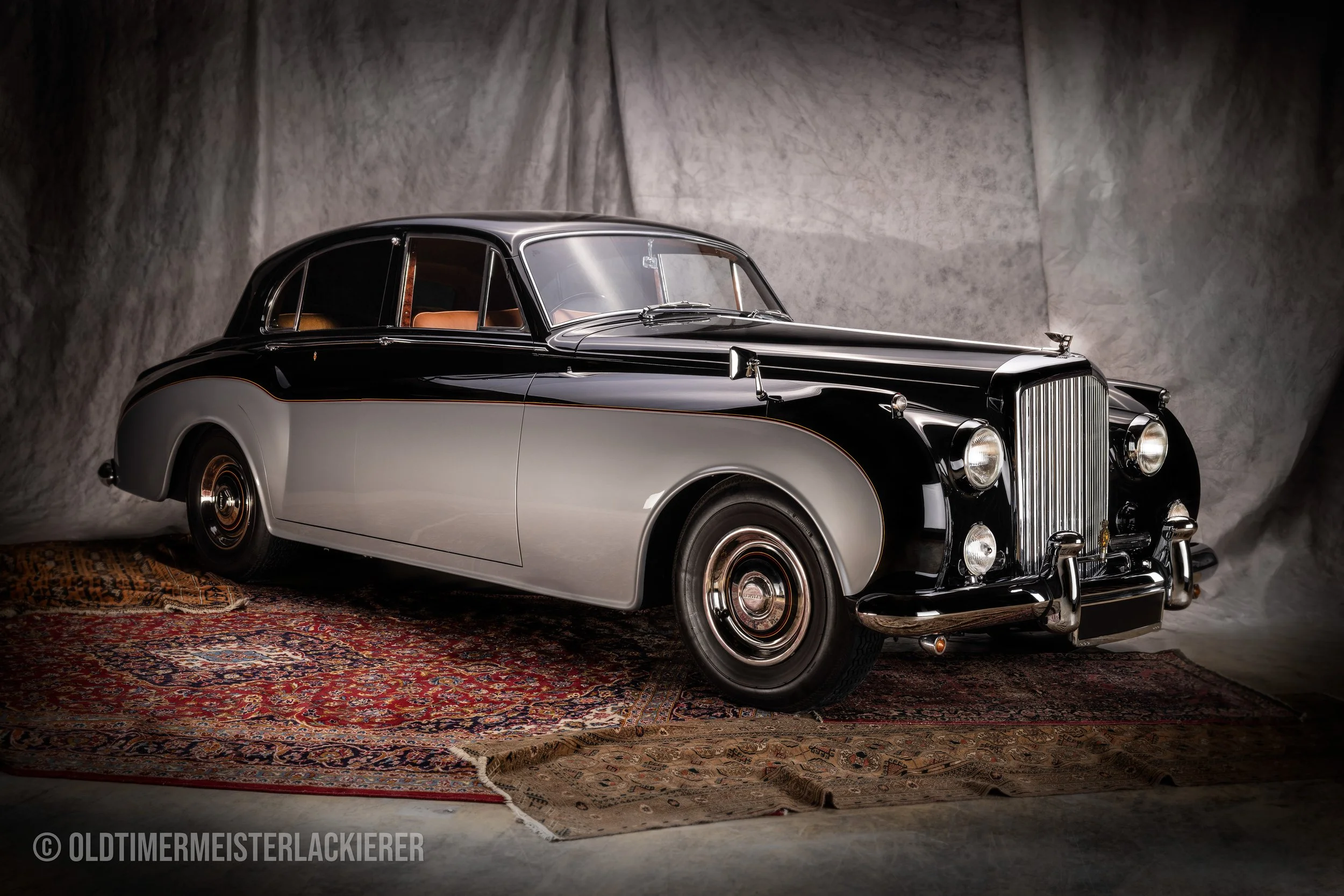
Bentley S1 James Young featuring the Egger Surface System (piano lacquer finish).
6. Transparent pricing structure
Each project is recorded digitally and recalculated after completion.
This makes it possible to track exactly how much time each work step took.
7. Order confirmation & appointment scheduling
I am a small business and can only handle a limited number of vehicles at the same time.
That's why there's a waiting list that I'm working through. Appointments are only confirmed once the order has been confirmed.
Does the customer need to prepare anything?
No. The customer can handle the entire project through me.
I work with trusted, long-standing partner companies:
paint stripping
mechanics
electrical system
saddlery
bodywork
Alternatively, customers may of course involve service providers of their own choice.
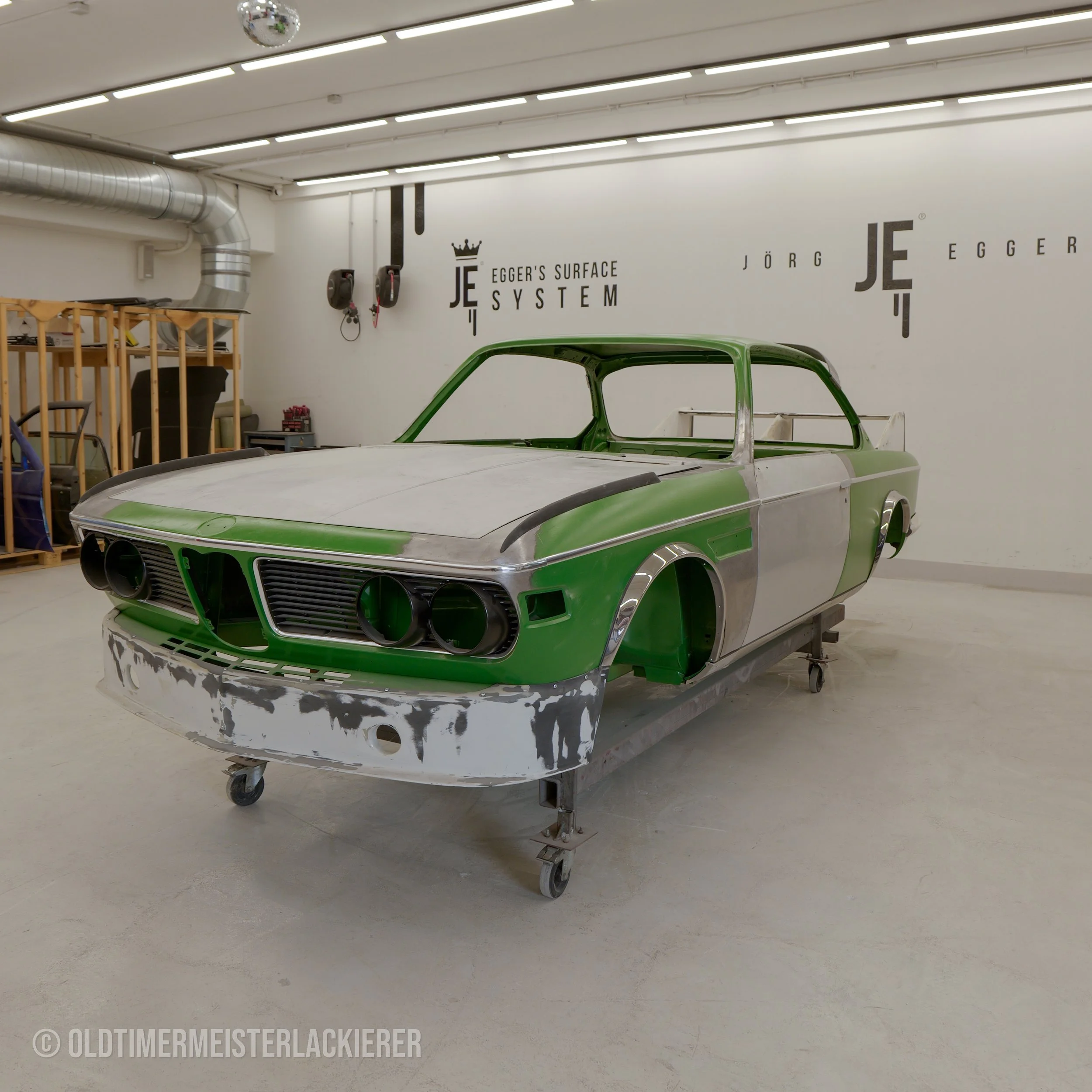
Here's what's important:
The vehicle must be delivered with all alignment-critical parts fitted:
doors
trim moldings
hoods
lights
indicators
This is the only way to check gap dimensions correctly and guarantee the highest quality.
8. Documentation
The customer receives:
Photographic documentation of the entire process
Color-coded stickers in the vehicle
Care instructions upon delivery
This provides security for me, while the customer receives a detailed restoration report that can be presented when the vehicle is sold, appraised or repaired.
9. Guarantee & Warranty
If minor issues arise afterwards, I will of course correct them free of charge. If it is not practical for me to carry out the repair personally because of the distance involved, I will cover the cost of having it professionally corrected by another company.
I would also correct any major errors without discussion.
However, in over 30 years of professional experience, this has never happened.
The warranty claim exists within the legal framework and expires two years after delivery of the vehicle.
10. Why does an order take so long?
The duration of a project is determined by two deliberate factors:
1.) I work on several vehicles at the same time.
2.) A key quality aspect here is the conventional, natural curing of primers and paints.
I deliberately avoid forced drying, as although this can speed up processes, in the long term it damages the paint finish, stability, and durability.
Natural curing significantly increases the quality of the paintwork.
11. Order completion and delivery
The order is completed as soon as the vehicle has been completely painted and finished and the remaining payment has been made by the customer. The vehicle is then either picked up in person or delivered by me.
Upon handover, the vehicle is inspected and the order is then considered complete.
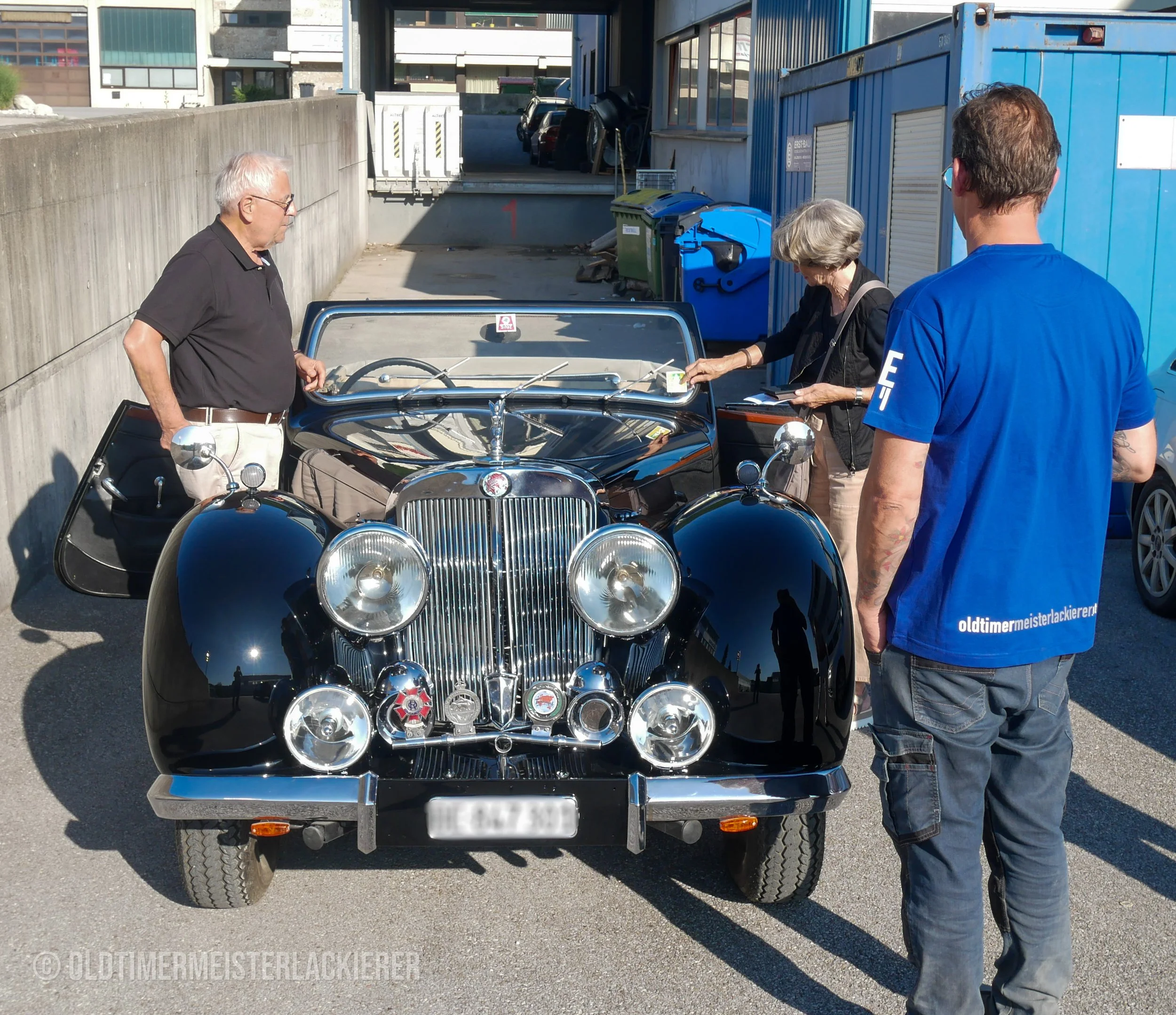
Handover of the Triumph Roadster 2000
12. Payment terms & storage fees
Payment shall be made in three installments:
1st installment (~1/3):
payable upon signing the order confirmation
2. Partial payment (~1/3):
In the middle of the order
Due within 7 days
From day 8: work stops and a storage fee of €22.00 net per calendar day applies
3. Final payment:
The vehicle will only be handed over once full payment has been received.
The remaining amount will be invoiced 7 days before handover.
From the eighth day after the invoice becomes overdue, a storage fee of €22.00 net per calendar day will be charged.
Cancellation of the order by the client:
If an order that has already been confirmed is canceled or withdrawn by the client, the following rules apply:
Cancellation up to 12 months before the planned start of work:
100% refund of the deposit minus a processing fee of €300.00 net.
Withdrawal between 12 and 6 months before the planned start of work:
Refund of 2/3 of the deposit paid
Cancellation between 6 and 3 months before the planned start of work:
Refund of 1/3 of the deposit paid
Cancellation 3 months or less before the planned start date:
No refund of the deposit paid
This rule is necessary because confirmed orders are bindingly included in work and capacity planning.
Late payment:
In the event of a payment delay of more than 7 days, the following measures shall apply:
A handling fee of €100.00 net will be charged.
Charging of storage fees in the amount of €22.00 net per calendar day
Temporary storage of the vehicle
Reintegration into the work schedule after 2–4 weeks at the earliest, depending on current workload
No storage fees shall be incurred for the period between receipt of payment and the actual resumption of work.
13. Final remarks:
This process is not intended to be an obstacle, but rather to provide clarity for both sides.
The more transparent the initial situation is, the more smoothly, efficiently, and effectively a project can be implemented.
When both sides know what they are getting into, the result is a collaboration between equals. Without surprises, without uncertainties, and without compromising on quality.
My goal is to customize vehicles so that they deliver outstanding performance and aesthetics over the long term.
With me, customers don’t get empty promises—they get transparent decisions, streamlined processes, and uncompromising execution.
Jörg Egger / Oldtimermeisterlackierer